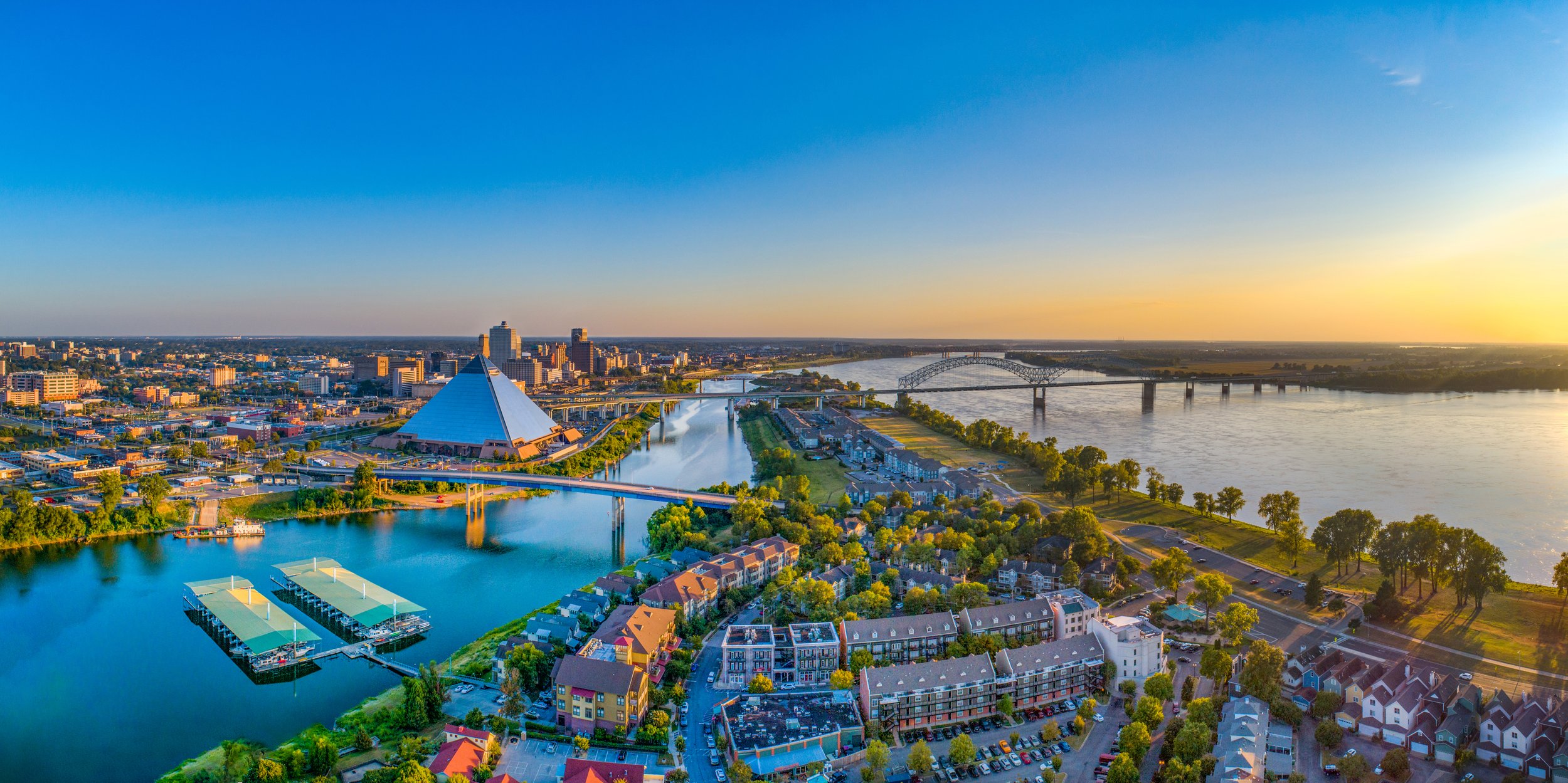
Memphis, Tennessee
Memphis, Tennessee is among the most historically and culturally important cities in the South, celebrated for its legacy in music, arts, and the civil rights movement. The City, home to over 600,000 residents, is committed to advancing climate action and sustainability through the Memphis Area Climate Action Plan (CAP), which sets goals to reduce greenhouse gas (GHG) emissions by 71% below 2016 levels and reach carbon-free electricity generation by 2050. The City recognizes that energy costs are a significant burden, particularly for low-income households, and is focused on lowering utility bills, reducing overall energy demand, and cutting emissions by prioritizing investments in the communities most impacted by climate change.
Memphis Programs, Policies, and Strategies
Through initiatives such as expanding weatherization and home retrofit programs, the City is working to improve home energy efficiency and resilience to extreme heat. In 2025, Memphis launched Memphis Heat Watch, a community-led initiative that identifies neighborhoods facing the greatest heat exposure and directs resources to areas where residents are most in need of support. These tend to be low-income neighborhoods that do not have the resources to improve their home conditions, pay for cooling, or access cooling centers. Complementing this effort, the Memphis Metropolitan Land Bank Authority established a Green Bank in 2025 to support homeowners and small building owners with critical retrofits through rebates for heat pumps, rooftop solar, and weatherization upgrades.
Memphis previously administered the federal Weatherization Assistance Program (WAP), but saw a high deferral rate for the program because many homes require significant home repairs that must be completed before receiving WAP assistance. Southwest Human Resource Agency, a local nonprofit that helps low-income individuals and families get access to services, has since taken on WAP administration, and the City turned its focus to help homes complete critical repairs and bring down the high deferral rate. With support from BEI and Elevate, Memphis launched its Residential and Rehab Assistance Program (RRRAP) to offer funding for home repairs to address health and safety issues in owner-occupied single family homes. This provides a pathway for many more homes to access energy efficiency and weatherization upgrades, including those from WAP, once critical home repairs are complete. By developing a referral process from RRRAP to WAP and other programs, this program helps to ensure homes are habitable, energy efficient, and resilient to future climate impacts.
BEI, in partnership with Elevate, is now supporting the Memphis Housing and Community Development Department in designing the RRRAP intake application and to stack federal Department of Housing and Urban Development (HUD) repair funds with WAP funding. BEI will continue supporting Memphis’s progress to eventually expand the program into a full Retrofit Navigator by helping to build the project pipeline and coordinate across local departments and expand the local contractor network to perform the work.
By establishing a pipeline from home repairs to energy efficiency upgrades through its RRRAP program, Memphis is serving as a model for others on how to align investments that create a more efficient, habitable, and climate-resilient local housing system.