

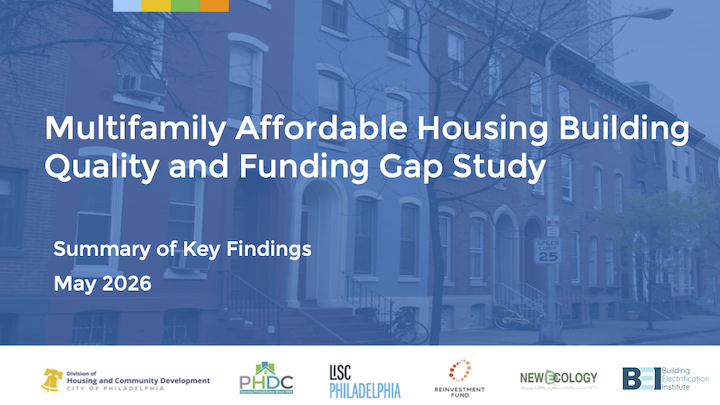
Multifamily Affordable Housing
Building Quality & Funding Gap Study
for Philadelphia, PA
BEI partnered with LISC Philadelphia, Reinvestment Fund, New Ecology, Philadelphia Housing Development Corporation (PHDC), and the City of Philadelphia Division of Housing and Community Development (DHCD) to produce this study.
The City of Philadelphia and PHDC commissioned this study to inform a proactive approach to affordable housing preservation that protects expiring subsidized units while also ensuring homes are safe, healthy, and resilient against extreme weather. You can read the Executive Summary or Full Report.
This study:
Evaluates the conditions of Philadelphia’s subsidized affordable housing, finding that every unit had multiple needs for health, safety, and habitability, including accessibility for disabled residents; weatherization; and heating, cooling, and water heating system replacement needs.
Assesses Philadelphia’s landscape of housing and energy funding sources. Due to a landscape of fragmented programs and funding gaps, Affordable Housing owners are pursuing band-aid repairs, deferring building retrofits entirely, or choosing to forgo future preservation programs and remove their units from the affordable housing supply.
Outlines pathways for comprehensive retrofit packages that connect housing quality with long-term affordability preservation. This includes recommended retrofit sequencing, considering urgent tenant needs, litigation risk, and building science.
Recommends strategies for targeting public funding before units are at risk from expiring subsidies and compounding hazards. This requires a coordinated delivery framework that identifies at-risk buildings before they reach a costly crisis point and help owners navigate the retrofit process with both technical and financial assistance.
The study provides an actionable, data-driven, collaborative preservation strategy for achieving housing affordability while also improving housing quality and resilience.
Download the report I View our funding analysis resources
Related reports:
Leveraging Catalytic Capital for Small Building Decarbonization in Boston
Funding Gap Analysis for Residential Building Electrification for Berkeley, CA